Prevent Trojanized Software: Practical Defences for Supply Chain Risk
Signing code does not prove the software is safe, as attackers frequently steal legitimate certificates to sign their own malicious payloads before detection.

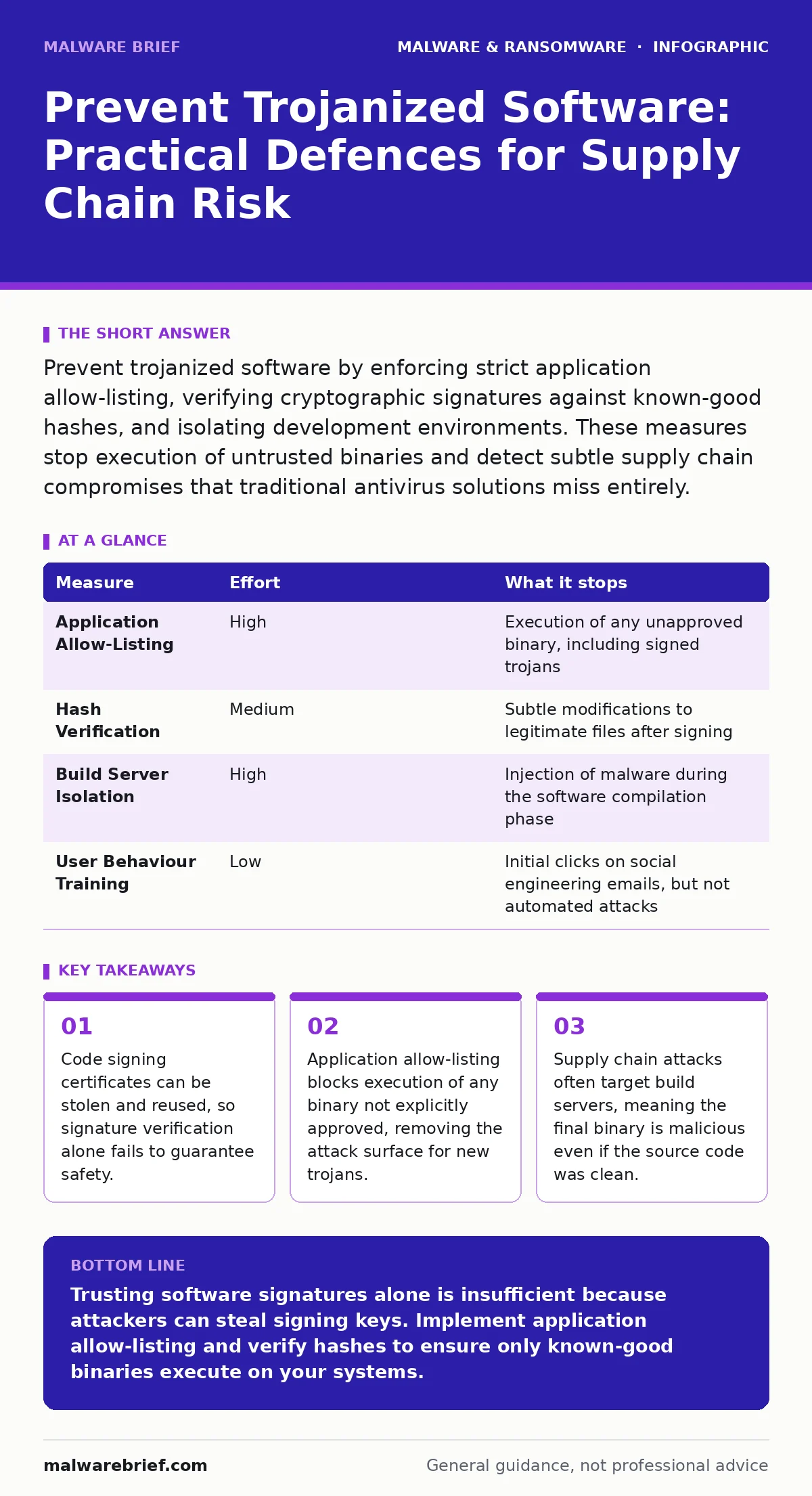
Prevent trojanized software by enforcing strict application allow-listing, verifying cryptographic signatures against known-good hashes, and isolating development environments. These measures stop execution of untrusted binaries and detect subtle supply chain compromises that traditional antivirus solutions miss entirely.
The Illusion of Trusted Signatures
Many organisations rely on digital signatures to verify software integrity. This approach assumes that a valid signature means the vendor produced the file. Attackers subvert this trust model by stealing private keys from compromised vendor systems. Once they hold the key, they can sign malicious updates that pass all standard verification checks. The signature is cryptographically valid, but the content is hostile. This is the core mechanism of trojanized software distribution. You cannot trust a signature without also validating the hash against a known-good baseline.
Imagine a legitimate update arrives with a perfect digital signature. Your system accepts it because the certificate matches the vendor. The file executes with full privileges. It contains a backdoor inserted during the build process. This scenario highlights why signature verification is a weak single layer. It proves origin, not safety. You must combine signature checks with strict hash validation to catch these discrepancies.
Application Allow-Listing as the Primary Barrier
Application allow-listing restricts execution to a predefined list of trusted binaries. This is the most effective technical control against trojanized software. It operates on a default-deny basis. Any executable not on the list is blocked from running, regardless of its signature or source. This stops zero-day trojans and stolen-certificate attacks immediately. The trade-off is operational friction. You must maintain the list carefully to avoid blocking legitimate tools.
This method removes the risk of accidental execution. Users cannot run a downloaded installer unless it is explicitly permitted. It also prevents lateral movement by blocking unknown scripts. Implementing allow-listing requires auditing current software usage. You must identify every legitimate binary in your environment. This initial effort is high, but the ongoing maintenance is predictable. It provides a hard boundary that malware cannot cross without detection.
Supply Chain Hygiene and Build Security
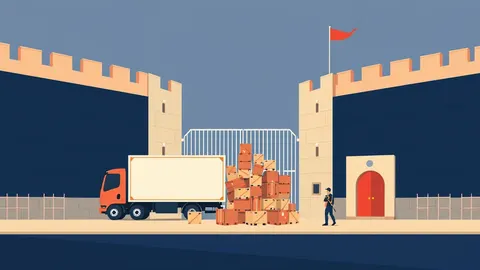
Trojanized software often enters through compromised build pipelines. Attackers target the systems that compile and package software. If they control the build server, they can inject malicious code into clean source files. The resulting binary appears legitimate because it comes from the official source. This is why securing the development environment is as critical as securing the endpoint. You must isolate build systems from general network access.
Suppose an attacker gains access to a developer workstation. They move laterally to the build server. They modify the compilation script to include a hidden payload. The next release contains the trojan. Every user who installs the update becomes infected. To prevent this, enforce strict access controls on build infrastructure. Use separate credentials for build processes. Monitor for changes to build scripts using file integrity monitoring. These steps reduce the risk of supply chain injection.
| Measure | Effort | What it stops |
|---|---|---|
| Application Allow-Listing | High | Execution of any unapproved binary, including signed trojans |
| Hash Verification | Medium | Subtle modifications to legitimate files after signing |
| Build Server Isolation | High | Injection of malware during the software compilation phase |
| User Behaviour Training | Low | Initial clicks on social engineering emails, but not automated attacks |
The Limits of User Awareness Training
Training users to spot malicious downloads is a common recommendation. It has limited value against trojanized software. These attacks do not rely on user error. The software looks, acts, and signs like a legitimate product. A user downloading an official update from a trusted vendor has no reason to suspect foul play. They follow best practices. The attack succeeds because the trust model is broken, not because the user was careless.
Training cannot teach users to inspect cryptographic hashes or verify build integrity. These are technical tasks requiring tooling. You should not expect staff to manually verify every download. Instead, automate the verification process. Use automated tools to check signatures and hashes before installation. Training is useful for spotting phishing attempts that deliver malware directly, but it fails against sophisticated supply chain compromises. Focus your training on reporting unusual system behaviour rather than identifying malicious files.
Network Segmentation and EDR Integration
Network segmentation limits the impact of a successful trojan execution. If a trojan activates, it needs to communicate with command-and-control servers. It also needs to move laterally to access sensitive data. Segmenting your network into zones with strict firewall rules restricts this movement. An infected workstation cannot easily reach the database server. This containment buys time for detection and response.
Endpoint detection and response (EDR) solutions provide visibility into process behaviour. They monitor for suspicious activities such as unexpected network connections or privilege escalation. While EDR may not prevent the initial execution of a trojanized binary, it can detect its malicious behaviour once active. Combining EDR with segmentation creates a layered defence. The trojan runs, but it cannot spread or exfiltrate data effectively. This approach acknowledges that prevention is not always perfect. It focuses on limiting damage when prevention fails.
See also: Difference Between Keyloggers and Spyware in Cyber Security · Endpoint Detection and Response vs Antivirus: Core Differences
What Does Not Work
Several common measures provide a false sense of security against trojanized software. Web filtering blocks known malicious domains, but trojanized software often uses legitimate cloud services for command-and-control. The traffic looks like normal web browsing. Blocking file types such as executables is ineffective because the trojan is embedded within legitimate installers. These installers are necessary for software updates. You cannot block them without breaking operations.
Password managers do not protect against trojanized software. The malware steals credentials after execution, not during login. Multi-factor authentication adds a layer, but if the trojan captures the session token, it bypasses the second factor. You must understand that these controls address different threat vectors. They do not stop the execution of malicious code disguised as legitimate software. Relying on them exclusively leaves your systems exposed to supply chain attacks.
Daily Verification and Maintenance
Maintaining defences against trojanized software requires consistent daily habits. You must verify that your allow-lists are up to date. New software deployments must be tested before wide release. Regular audits of build server logs help detect unauthorized changes. These tasks are mundane but critical. Neglecting them allows attackers to persist undetected.
Imagine a scenario where a developer adds a new library to the build process. The library is compromised. The next release contains the trojan. Without daily checks, this goes unnoticed for weeks. With automated monitoring, the anomaly in the build log triggers an alert. The release is halted. This routine vigilance is the difference between a minor incident and a major breach. It requires discipline and proper tooling.
- Verify that all deployed binaries match their expected cryptographic hashes.
- Review allow-list exceptions for any unusual or newly added applications.
- Check build server logs for unauthorized access or script modifications.
Key takeaways
- Code signing certificates can be stolen and reused, so signature verification alone fails to guarantee safety.
- Application allow-listing blocks execution of any binary not explicitly approved, removing the attack surface for new trojans.
- Supply chain attacks often target build servers, meaning the final binary is malicious even if the source code was clean.
Trusting software signatures alone is insufficient because attackers can steal signing keys. Implement application allow-listing and verify hashes to ensure only known-good binaries execute on your systems.
Frequently asked questions
Can antivirus software detect trojanized updates?
Standard antivirus often fails to detect trojanized updates because the files are signed and structurally similar to legitimate software. Detection usually occurs only after the malware behaves maliciously, which may be days or weeks after installation.
How do I verify if a software update is legitimate?
Compare the cryptographic hash of the downloaded file with the hash published by the vendor on their official website. Ensure the digital signature is valid and matches the vendor's public key. Use automated tools to perform these checks consistently.
Is it safe to download software from third-party sites?
Downloading from third-party sites increases risk significantly. These sites may host modified versions of software that include trojans. Always download directly from the official vendor website or a verified package manager to minimize supply chain exposure.
What is the role of sandboxing in preventing trojanized software?
Sandboxing isolates software execution in a restricted environment. It limits the damage a trojan can cause by preventing it from accessing sensitive system areas. It does not prevent execution, but it contains the threat and facilitates analysis.
How this guide was produced: written by the Malware Brief editorial team with AI assistance, checked against the public references listed below, and reviewed when the facts change. See our editorial policy or report an error.