What is a DevSecOps Engineer: The Role That Shifts Security Left
A DevSecOps engineer embeds automated security checks into the deployment pipeline, catching flaws before they reach production environments where fixes cost significantly more.
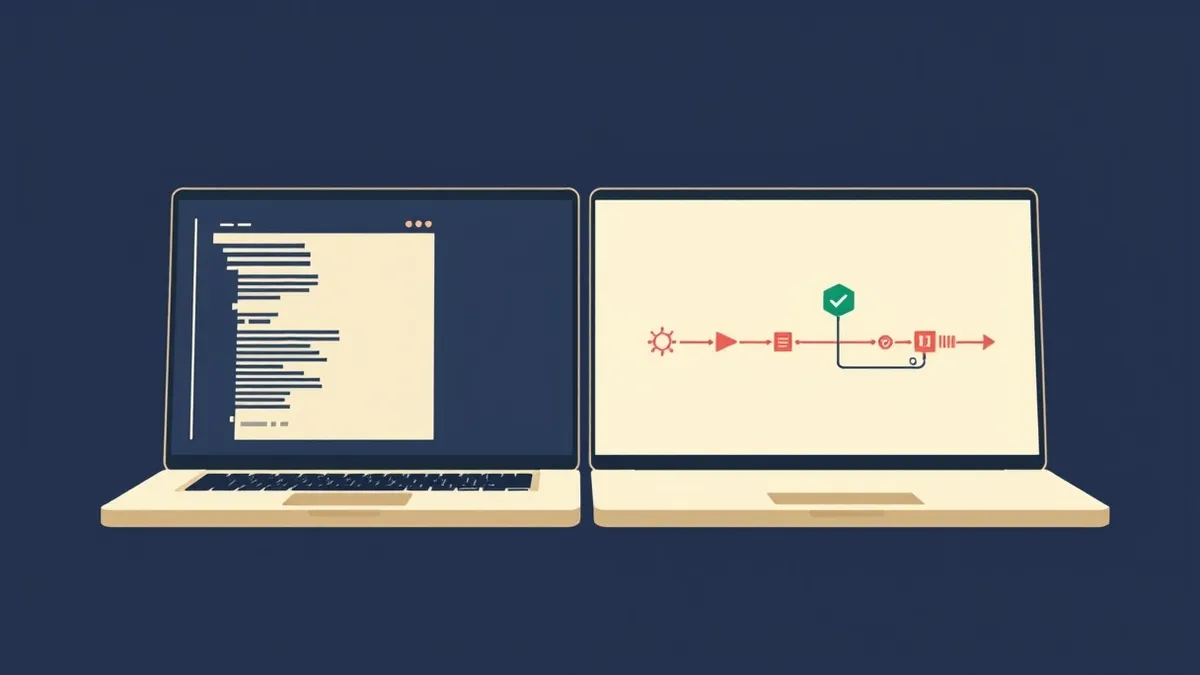
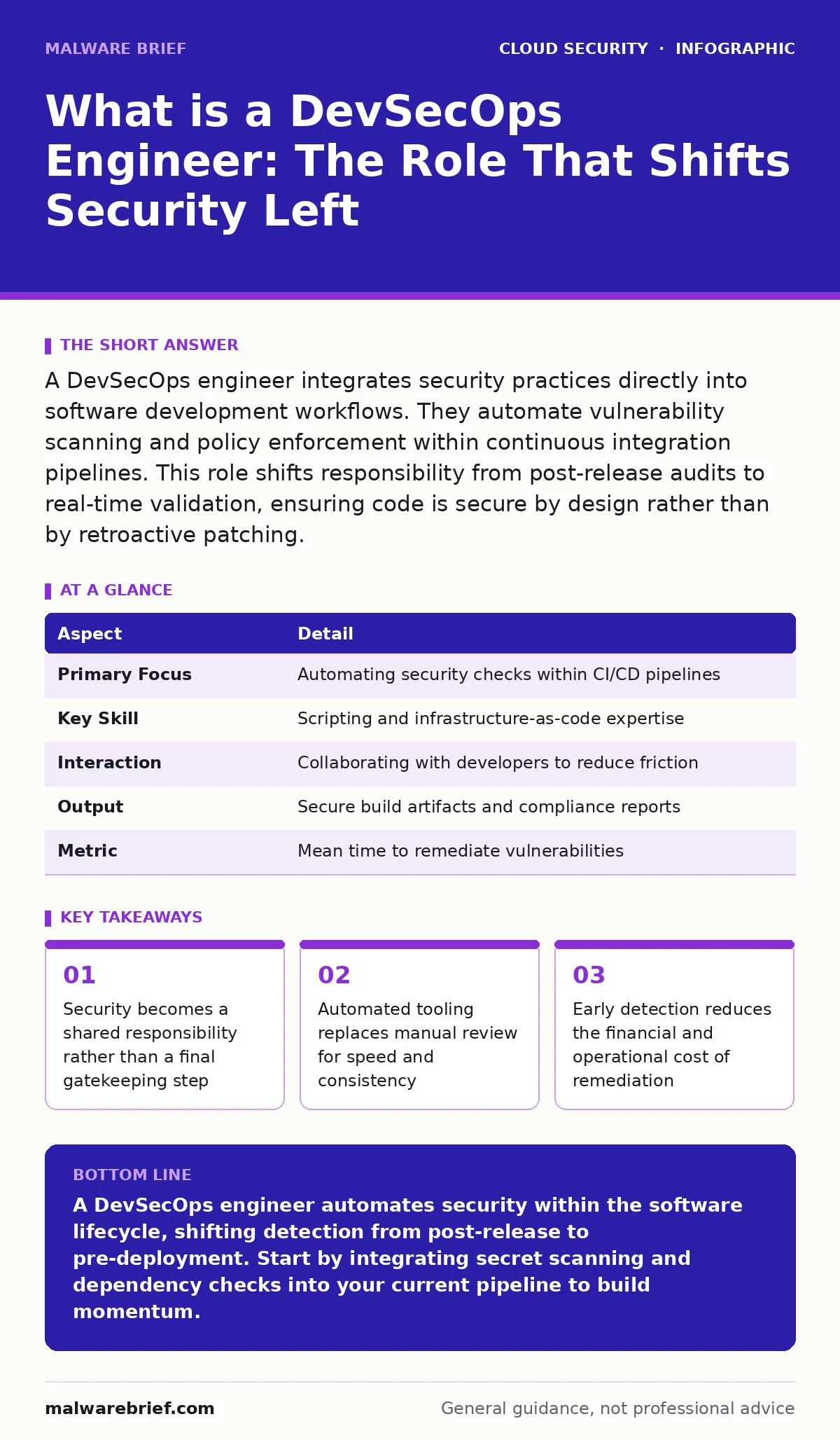
A DevSecOps engineer integrates security practices directly into software development workflows. They automate vulnerability scanning and policy enforcement within continuous integration pipelines. This role shifts responsibility from post-release audits to real-time validation, ensuring code is secure by design rather than by retroactive patching.
Everyday Analogy for DevSecOps
Imagine a car factory that tests engines only after assembling entire vehicles. If an engine fails, the factory must dismantle the car, replacing parts and delaying shipment. Now imagine testing each piston and valve before assembly. Defects are caught early, when they are cheap and easy to fix. DevSecOps applies this logic to software. Instead of waiting for a security team to audit finished code, security checks run automatically during every build. This prevents broken components from ever reaching the final product.
What is a DevSecOps Engineer
A DevSecOps engineer is a specialist who designs and maintains the automated security infrastructure within a software delivery pipeline. They do not merely scan for vulnerabilities; they build the systems that prevent insecure code from being merged. This role sits at the intersection of development, operations, and security. The engineer configures static analysis tools, manages secret detection, and enforces compliance policies as code. Their goal is to make security invisible to developers while ensuring rigorous standards are met.
| Aspect | Detail |
|---|---|
| Primary Focus | Automating security checks within CI/CD pipelines |
| Key Skill | Scripting and infrastructure-as-code expertise |
| Interaction | Collaborating with developers to reduce friction |
| Output | Secure build artifacts and compliance reports |
| Metric | Mean time to remediate vulnerabilities |
How the Role Works in Practice
The engineer integrates tools into the continuous integration and continuous deployment pipeline. When a developer submits code, the pipeline triggers automated tests. These tests include static application security testing, which scans source code for known vulnerability patterns without executing it. The engineer ensures these tools do not block development unnecessarily. They tune false-positive rates and provide clear feedback to developers. If a critical flaw is detected, the build fails immediately. The developer receives a specific error message explaining the issue and how to fix it. This immediate feedback loop accelerates learning and reduces recurring mistakes.
Who This Role Affects
This role changes how every team member interacts with security. Developers no longer view security as an external auditor that delays releases. They gain confidence that their code meets standards before it moves forward. Operations teams benefit from fewer emergency patches and stable deployments. Security analysts shift from manual scanning to overseeing automated systems. The culture moves from blame to collaboration. Everyone understands that security is a quality attribute, not a separate phase. This alignment reduces friction and speeds up delivery cycles. It also clarifies accountability. Each team member owns the security of their contributions.
Common Misconceptions About the Role
Many believe a DevSecOps engineer is simply a security analyst who learned to code. This is incorrect. The role requires deep understanding of software engineering principles and infrastructure automation. Another mistake is assuming automation eliminates human judgment. Tools can be bypassed or misconfigured. The engineer must continuously validate tool effectiveness. Some organisations hire this role to replace security teams. This fails because automation handles routine checks, but complex threats require human analysis. The role augments security, it does not replace it. Understanding these distinctions prevents wasted effort and unrealistic expectations.
See also: Identity as the New Perimeter: Why Firewalls No Longer Define Security · Cloud data exfiltration: how it works and how to stop it
What to Do About Implementation
Start by mapping your current deployment pipeline. Identify where code moves from development to production. Insert security gates at these transition points. Begin with low-friction checks like secret detection and dependency scanning. These tools provide immediate value with minimal disruption. Train developers to read and act on security feedback. Provide clear documentation on how to fix common issues. Measure the time it takes to resolve findings. Use this data to improve tooling and processes. Gradually add more complex checks as the team adapts. Do not attempt to secure everything at once. Incremental adoption ensures sustainability.
Integrating with Broader Cloud Strategy
This role operates within a larger cloud security framework. Understanding the shared responsibility model is fundamental. The cloud provider secures the infrastructure, while you secure the content and configuration. A DevSecOps engineer ensures your configurations align with this model. They often work alongside teams managing cloud landing zones, which provide secure foundational environments.
They also address infrastructure-as-code misconfigurations before resources are provisioned. By securing the code that defines infrastructure, they prevent misconfigurations at the source. This approach complements other strategies like SaaS security posture management, which focuses on application-level settings.
Key takeaways
- Security becomes a shared responsibility rather than a final gatekeeping step
- Automated tooling replaces manual review for speed and consistency
- Early detection reduces the financial and operational cost of remediation
- Engineers must balance security constraints with development velocity
A DevSecOps engineer automates security within the software lifecycle, shifting detection from post-release to pre-deployment. Start by integrating secret scanning and dependency checks into your current pipeline to build momentum.
Frequently asked questions
Do I need a DevSecOps engineer if I have a traditional security team?
Yes, because traditional teams often react to finished products. A DevSecOps engineer proactively embeds security into the build process, reducing the load on reactive teams and catching issues earlier.
What skills should a DevSecOps engineer have?
They need strong coding abilities, knowledge of CI/CD tools, and familiarity with security standards. Understanding cloud infrastructure and automation scripts is also necessary for effective implementation.
How does this role differ from a security engineer?
A security engineer focuses on broader organisational security policies and incident response. A DevSecOps engineer specialises in integrating those policies into automated software delivery pipelines.
Can a developer do DevSecOps tasks?
Developers can run security tools, but a dedicated engineer ensures the tools are configured correctly, maintained, and integrated seamlessly without hindering development speed.
How this guide was produced: written by the Malware Brief editorial team with AI assistance, checked against the public references listed below, and reviewed when the facts change. See our editorial policy or report an error.