Identity Theft Protection: 6 Misconceptions That Leave You Exposed
Identity theft protection services monitor for data exposure but cannot prevent the initial compromise or reverse financial damage.
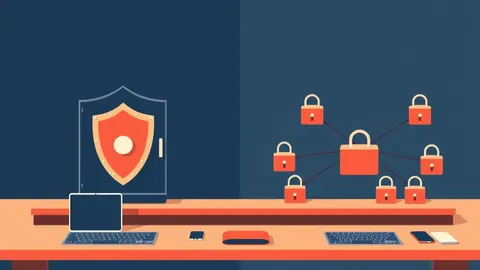
Identity theft protection does not stop attacks. It detects that your data has appeared on dark web markets or credit bureaus. It is a monitoring tool, not a shield. You must combine it with strong authentication, regular account audits, and careful handling of personal documents to reduce the risk of initial compromise.
Misreading: Protection prevents identity theft
Correct reading: Identity theft protection services function as alarms, not locks. They scan public records, credit bureaus, and dark web forums for your personal details. When they find a match, they notify you. The theft has already occurred. The service does not block the attacker from stealing your data. It only tells you that your information is now in the wrong hands. You cannot stop the initial breach with a monitoring subscription. You stop it by securing your accounts and limiting data exposure.
Imagine you leave your wallet on a park bench. A monitoring service is like a friend who texts you when they see your wallet in a pawn shop. The friend does not stop the thief from taking the wallet. The text arrives after the loss. You need to keep your wallet in your pocket to prevent the theft. Identity theft protection is the text message. It is useful for recovery, but it is useless for prevention. Relying on it for safety creates a false sense of security.
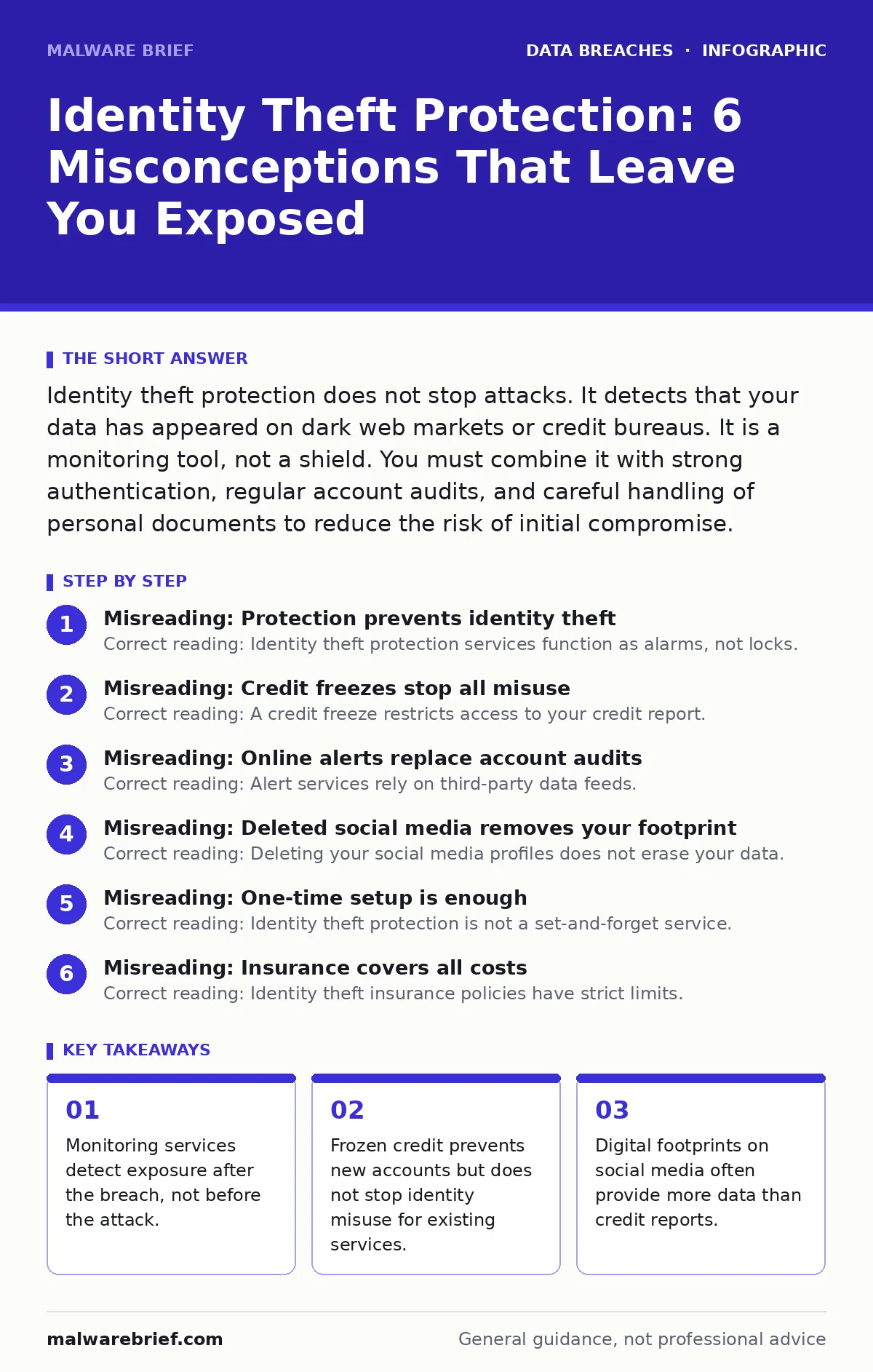
Misreading: Credit freezes stop all misuse
Correct reading: A credit freeze restricts access to your credit report. Lenders cannot pull your report to approve new loans, credit cards, or mortgages. This stops attackers from opening new accounts in your name. It does not stop them from using your existing accounts. An attacker can still drain your bank account, apply for utility services, or file fraudulent tax returns. These actions do not require a credit check. They rely on other forms of identification. A freeze is a single-layer defence. It ignores the many ways identity can be abused outside the credit system.
Suppose an attacker has your name, date of birth, and national insurance number. They cannot open a new credit card if your credit is frozen. However, they can call your mobile provider, answer security questions using your public data, and add expensive services to your existing plan. The freeze does nothing here. You need separate alerts for utility changes and phone number porting. Credit freezes are effective for financial fraud. They are blind to other types of identity misuse.
Misreading: Online alerts replace account audits
Correct reading: Alert services rely on third-party data feeds. These feeds update at different speeds. Some are real-time. Others update weekly or monthly. An alert might arrive days after the breach. By then, the attacker may have moved funds or closed the account. You must perform your own regular audits. Log into your bank, email, and social media accounts. Check for unknown devices, recent logins, and changed contact details. Do not wait for an email from a monitoring service. Direct inspection is faster and more reliable. The monitoring service is a backup, not a primary source of truth.
Imagine your bank account is compromised. The attacker changes the email address on file. The monitoring service will not know about this change. It only sees the old data. You will never receive the alert because it goes to the attacker’s email. You only discover the breach when you try to log in. Regular manual checks reveal these silent changes. They catch issues that automated systems miss. Your attention is the most effective detection tool.
Misreading: Deleted social media removes your footprint
Correct reading: Deleting your social media profiles does not erase your data. Other users may have saved, shared, or archived your posts. Third-party data brokers scrape public information and store it in their databases. These databases persist even after you delete your original content. Search engines cache pages for months or years. Your digital footprint remains accessible. Identity thieves aggregate data from multiple sources. They piece together your life from fragments left behind. Deleting one source does not remove the aggregated profile. You must actively request removal from data brokers.
Suppose you delete your Facebook account. A data broker may still have your home address, job title, and family members. They collected this data years ago. They sell it to marketers and others. Attackers buy these profiles to build detailed dossiers. They use this information to answer security questions. Your deletion request only removes the data from Facebook. It does not touch the broker’s database. You must contact each broker to remove your information. This is a slow and tedious process. It requires persistent effort.
Misreading: One-time setup is enough
Correct reading: Identity theft protection is not a set-and-forget service. Your digital life changes. You get new jobs, move houses, and open new accounts. Each change creates new data points. Attackers look for fresh information. You must update your monitoring preferences. Add new accounts to watch. Remove old ones. Change your password rotation schedule. Review your privacy settings on social media. Security is a continuous process. It requires regular maintenance. Neglecting updates leaves gaps in your coverage. These gaps allow attackers to insert new data into your profile.
Imagine you change your job. You use your new employer’s email address for banking. If you do not update your monitoring service, it may flag legitimate transactions as suspicious. Or worse, it may miss alerts related to your new email. You must keep your profile current. This includes updating contact details with banks and service providers. Stale data leads to missed alerts. It also makes it harder to verify your identity during a dispute. Regular updates ensure your protection matches your current life.
See also: 3 Types of Insider Threats: Classifications, Detection and Mitigation Strategies · Difference between ISO 27001 and 42001: Scope, Supply Chain Focus, and Audit Realities
Misreading: Insurance covers all costs
Correct reading: Identity theft insurance policies have strict limits. They cover specific costs, such as legal fees or lost wages. They do not cover emotional distress or reputational damage. Some policies require you to prove financial loss. Others exclude certain types of fraud. Read the policy wording carefully. Understand what is excluded. Do not assume full coverage. The insurance is a safety net for recovery. It does not prevent the breach. It does not restore your time. It provides limited financial reimbursement for documented losses.
Suppose an attacker files a tax refund in your name. You spend weeks correcting the error with the tax authority. You lose a day of work. The insurance may cover the lost wages. It will not cover the stress. It may not cover the legal fees if you hire a specialist. The coverage is narrow. It is designed to mitigate financial impact. It does not undo the breach. You must still deal with the bureaucracy. The insurance is a minor aid in a long process.
Misreading: Privacy settings block data collection
Correct reading: Privacy settings on apps and websites limit what is shown to other users. They do not stop the platform from collecting your data. The platform still tracks your behaviour, location, and contacts. They sell this data to advertisers and partners. These partners may breach security. Your data may leak from these third parties. Privacy settings give you control over visibility. They do not give you control over data retention. You are still a data point in their system. The risk of exposure remains.
Imagine you set your Instagram profile to private. Your friends cannot see your posts. Instagram still knows where you are and what you like. They share this with advertisers. If an advertiser suffers a data breach, your data may be exposed. The privacy setting did not protect you. It only hid your content from other users. Data collection is separate from data visibility. You must assume your data is being collected. Limit the data you provide. Use minimal profiles. Reduce the value of your data to attackers.
Related considerations include how data loss prevention tools work within organisations to stop data from leaving. Understanding this helps you see why personal privacy settings are insufficient. You must also consider third-party data breaches as a primary source of exposure. Your data is often stolen from partners, not the main service. This shifts the risk away from your direct actions. It highlights the need for broad monitoring.
Key takeaways
- Monitoring services detect exposure after the breach, not before the attack.
- Frozen credit prevents new accounts but does not stop identity misuse for existing services.
- Digital footprints on social media often provide more data than credit reports.
Frequently asked questions
Does identity theft protection monitor my bank accounts?
Most services monitor credit reports and public records. They do not monitor your bank account balances or transactions directly. You must enable alerts within your banking app for real-time transaction monitoring.
Can I remove my data from all data brokers?
You can request removal from many brokers. It is difficult to remove all data. Some brokers ignore requests. You must repeat the process regularly as new data appears. Automated services can help manage these requests.
Is identity theft protection worth the cost?
It depends on your risk tolerance. It provides peace of mind and early alerts. It does not prevent theft. If you are diligent with security, you may not need it. If you value convenience and early warning, it is useful.
How do I respond to an identity theft alert?
Contact the affected institution immediately. Freeze your credit if needed. Change passwords and enable multi-factor authentication. File a report with the relevant authorities. Monitor your accounts for further suspicious activity.
How this guide was produced: written by the Malware Brief editorial team with AI assistance, checked against the public references listed below, and reviewed when the facts change. See our editorial policy or report an error.