Vulnerability Embargoes: Meaning, Rules and Practical Use
Embargoes restrict public disclosure of security flaws until vendors can release fixes, creating a temporary window of silence that balances risk against exposure.

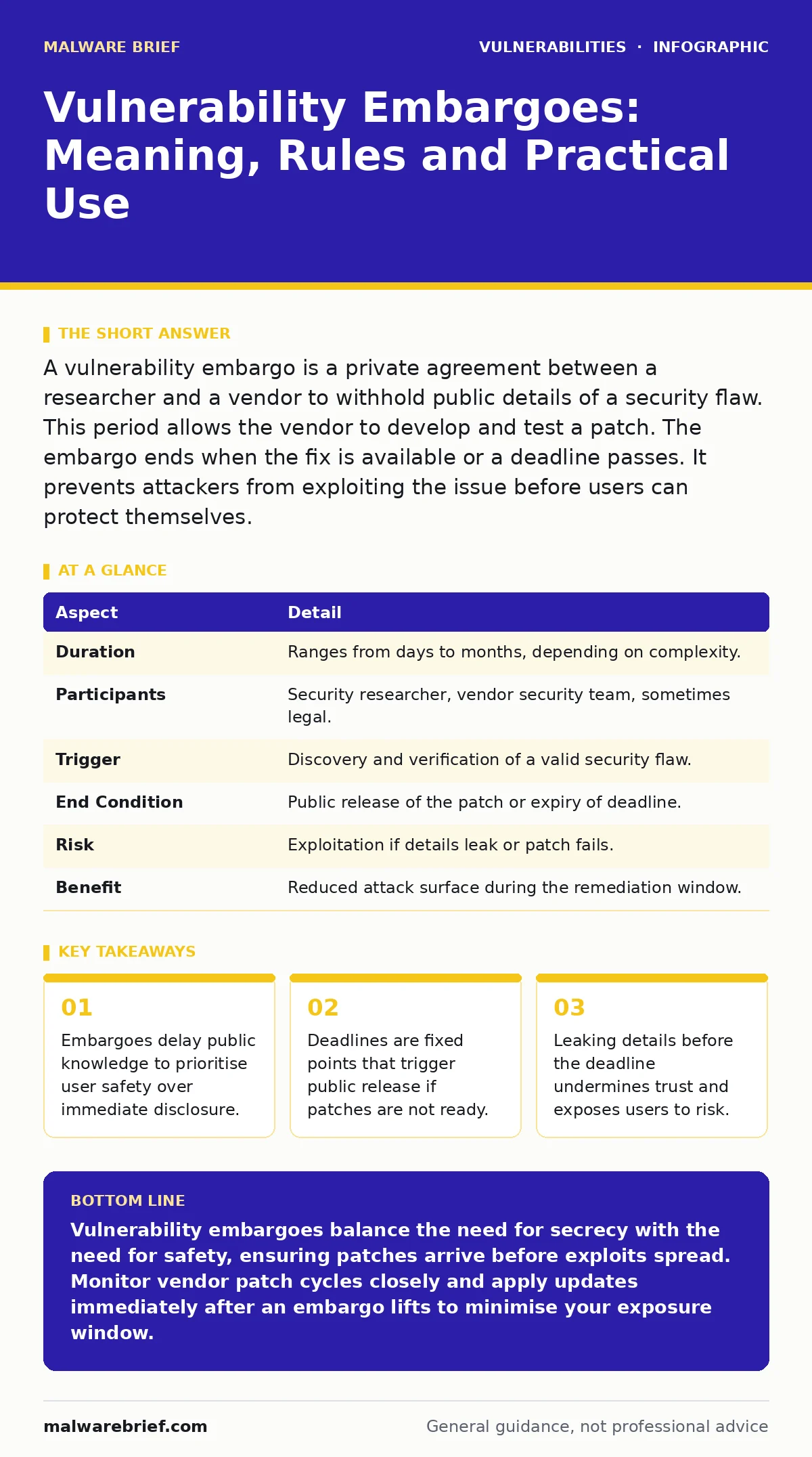
A vulnerability embargo is a private agreement between a researcher and a vendor to withhold public details of a security flaw. This period allows the vendor to develop and test a patch. The embargo ends when the fix is available or a deadline passes. It prevents attackers from exploiting the issue before users can protect themselves.
The Library Analogy for Security Silence
Imagine you discover a hidden door in a library that leads directly to the server room. You could shout about it immediately, allowing anyone to sneak in. Alternatively, you could whisper the location to the librarian. The librarian then locks the door and installs a new handle before telling the public. An embargo is that period of silence. It keeps the weakness secret while the fix is applied. The goal is to close the door before the world knows it was open.
This approach prevents opportunistic attackers from scanning for the flaw. If you publish the details instantly, automated tools will probe every instance of the software. The embargo creates a buffer zone. It gives system administrators time to update their environments. The trade-off is transparency. Some argue that silence hides poor security practices from scrutiny. However, the immediate risk of exploitation usually outweighs the benefit of instant public awareness.
Defining the Embargo Mechanism
A vulnerability embargo is a formal or informal agreement to keep specific technical details confidential. These details include the root cause, affected versions, and proof-of-concept code. The researcher agrees not to publish these elements. The vendor agrees to work on a remediation. This structure differs from general confidentiality agreements. It focuses specifically on security defects that have been identified and verified.
The term originates from journalistic practices where information is withheld until a specific date. In cybersecurity, the concept evolved to manage the release of sensitive technical data. It is not a legal contract in most cases. It relies on professional reputation and community norms. Researchers risk losing access to vendor programmes if they break embargoes. Vendors risk losing trust if they ignore deadlines. This mutual dependency creates a stable framework for responsible disclosure.
Day-to-Day Operations and Workflows
Day-to-day, an embargo involves secure communication channels. Researchers submit findings through private portals. Vendors acknowledge receipt and begin internal analysis. The vendor’s security team assesses the severity. They determine which products are affected. Then, they begin coding the fix. This process requires coordination across engineering teams. The researcher may provide additional context to help reproduction. They do not share the data with third parties.
The vendor tests the patch internally. They verify that the fix resolves the issue. They also check for regressions. A regression is a new bug introduced by the fix. Only after successful testing does the vendor schedule the release. The researcher waits. They may receive status updates. If the vendor delays, the researcher may warn of an impending disclosure. The embargo ends when the patch is publicly available. At that moment, the researcher can publish their analysis.
| Aspect | Detail |
|---|---|
| Duration | Ranges from days to months, depending on complexity. |
| Participants | Security researcher, vendor security team, sometimes legal. |
| Trigger | Discovery and verification of a valid security flaw. |
| End Condition | Public release of the patch or expiry of deadline. |
| Risk | Exploitation if details leak or patch fails. |
| Benefit | Reduced attack surface during the remediation window. |
Common Misconceptions About Silence
Many people believe embargoes are designed to hide vendor incompetence. This view ignores the practical reality of software development. Patches take time to write, test and distribute. Immediate disclosure forces users to choose between being vulnerable or waiting. An embargo aligns the release of the fix with the release of the knowledge. It reduces the window where users are exposed without a remedy.
Another misconception is that embargoes prevent all discussion. Researchers can often discuss the general nature of the flaw. They can mention the affected product family. They cannot share the specific code or configuration that triggers the bug. This distinction allows for general awareness. It prevents targeted attacks. The silence is specific, not total. It focuses on the actionable technical details that enable exploitation.
Some assume that breaking an embargo is harmless. This is incorrect. Early disclosure triggers automated scanning. Bots will probe the internet for the vulnerable software. This creates a spike in attacks. Users who cannot patch immediately become targets. The researcher gains attention, but the community suffers. The trade-off is between personal recognition and collective security. Most professionals prioritise the latter.
The Role of Deadlines and Trust
Deadlines are the structural backbone of an embargo. A typical deadline might be ninety days. This timeframe allows for complex fixes. If the vendor cannot meet the deadline, they must communicate. They explain the delay and propose a new date. The researcher evaluates this request. If the risk is high, they may shorten the deadline. If the vendor is transparent, they may extend it.
Trust is the currency of this system. Vendors that consistently meet deadlines build a strong reputation. Researchers are more willing to engage with them. Vendors that delay without reason lose this trust. Researchers may choose to disclose publicly earlier. This pressure mechanism ensures accountability. It prevents vendors from indefinitely delaying fixes. The balance of power shifts based on historical performance.
See also: Runtime Application Self-Protection: Benefits, Limits and Trade-offs · CVE Numbering Authorities: What Small Businesses Must Verify
Integration with Broader Security Practices
Embargoes do not exist in isolation. They interact with patch management processes. When an embargo lifts, administrators must act quickly. They apply the new software version. This is where dependency updates become critical. If the vulnerable component is a library, updating it requires checking all dependent applications. Failure to update leaves the system exposed.
The quality of the fix matters. A poor patch may not fully resolve the issue. This is why secure code review is vital. It ensures the fix is correct. Sometimes, vendors use backported security fixes for older versions. These are changes applied to legacy code. They maintain security without forcing a full upgrade. This approach helps organisations that cannot move to the latest version.
When Embargoes Fail or Are Broken
Embargoes can fail due to miscommunication. A vendor might misunderstand the severity. They might deprioritise the fix. The researcher, seeing no progress, may feel compelled to disclose. This leads to a public dispute. It damages the relationship between the researcher and the vendor. It also leaves users in a state of uncertainty.
Leaks can occur accidentally. A researcher might discuss the flaw with a colleague. That colleague might share it further. The details spread. The embargo is broken. The vendor loses the ability to control the narrative. Attackers begin exploiting the flaw. The researcher faces backlash. The vendor faces liability. This scenario highlights the fragility of informal agreements.
The Future of Disclosure Practices
The practice of embargoes continues to evolve. Standardised frameworks are emerging. These frameworks define clear timelines and responsibilities. They reduce ambiguity. They provide a reference point for disputes. The goal is to maximise user safety. Minimise the time between discovery and remediation.
Researchers are adopting more rigorous standards. They verify findings thoroughly. They provide detailed reports. They engage constructively with vendors. Vendors are improving their response times. They invest in security engineering. They prioritise transparency. This shift benefits the entire ecosystem. It creates a more resilient environment.
Key takeaways
- Embargoes delay public knowledge to prioritise user safety over immediate disclosure.
- Deadlines are fixed points that trigger public release if patches are not ready.
- Leaking details before the deadline undermines trust and exposes users to risk.
Vulnerability embargoes balance the need for secrecy with the need for safety, ensuring patches arrive before exploits spread. Monitor vendor patch cycles closely and apply updates immediately after an embargo lifts to minimise your exposure window.
Frequently asked questions
What happens if a vendor ignores the embargo deadline?
The researcher typically publishes the details publicly. This forces the vendor to address the issue or face reputational damage. Users are then exposed to immediate risk until they patch.
Can a researcher share the vulnerability with a third party?
Generally no. Sharing with unauthorised third parties breaks the embargo. It risks leaking details to attackers. Researchers should only share with the vendor and their legal counsel if necessary.
How long do embargoes usually last?
Durations vary based on complexity. Simple fixes may take weeks. Complex issues may take months. Standard deadlines often range from sixty to ninety days, but this is not a fixed rule.
Is an embargo a legal contract?
Usually no. Most embargoes are based on professional trust and community norms. Some vendors may have formal terms, but these are not universal. The primary enforcement mechanism is reputation.
How this guide was produced: written by the Malware Brief editorial team with AI assistance, checked against the public references listed below, and reviewed when the facts change. See our editorial policy or report an error.