Protected health information is an association between patient and provider
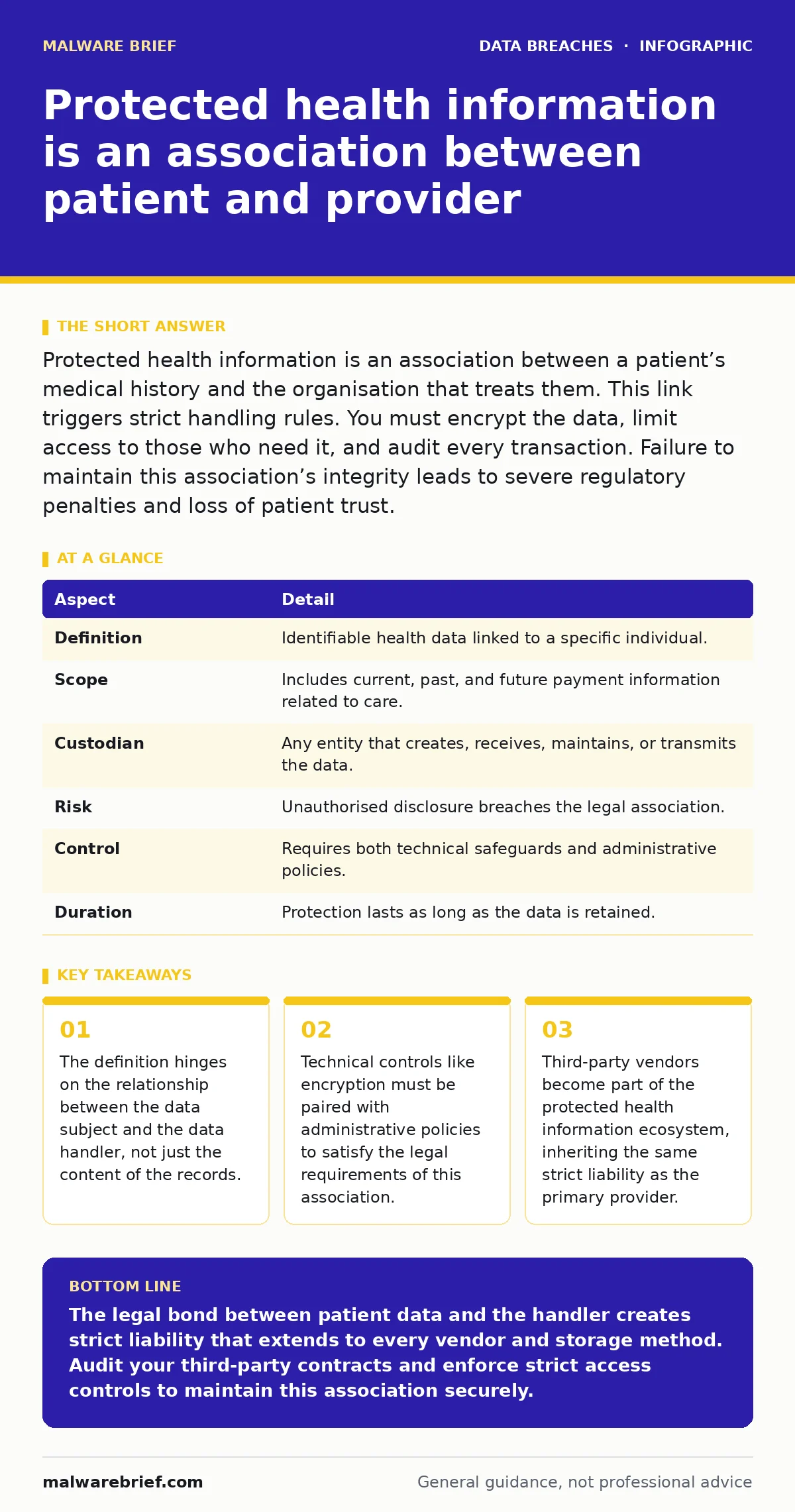
Protected health information creates a legal bond between patient data and the entity that holds it, making every storage decision a compliance risk.
Protected health information is an association between a patient’s medical history and the organisation that treats them. This link triggers strict handling rules. You must encrypt the data, limit access to those who need it, and audit every transaction. Failure to maintain this association’s integrity leads to severe regulatory penalties and loss of patient trust.
The nature of the data bond
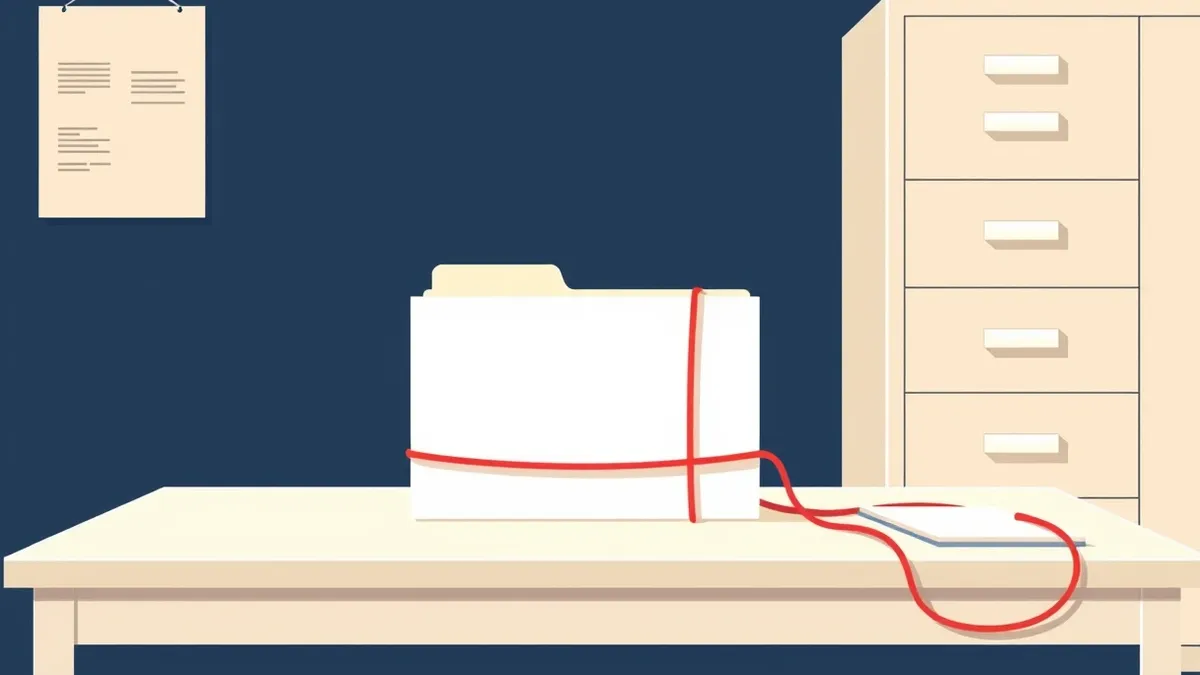
Imagine a library where every book is locked in a safe. The key does not just open the safe; it proves who is allowed to read the book. Protected health information operates on this principle. It is not merely a collection of medical facts. It is a legal construct that binds the data to the entity responsible for its care. This binding creates a duty of care that extends beyond simple privacy.
The association exists because the data reveals intimate details about a person’s physical or mental state. When an organisation collects this data, it assumes a role as a custodian. The custodian must protect the information from unauthorised access, alteration, or destruction. This duty is continuous. It does not end when the patient leaves the clinic or the hospital discharge paperwork is filed. The data remains protected health information as long as the organisation retains it.
| Aspect | Detail |
|---|---|
| Definition | Identifiable health data linked to a specific individual. |
| Scope | Includes current, past, and future payment information related to care. |
| Custodian | Any entity that creates, receives, maintains, or transmits the data. |
| Risk | Unauthorised disclosure breaches the legal association. |
| Control | Requires both technical safeguards and administrative policies. |
| Duration | Protection lasts as long as the data is retained. |
How the association functions
The mechanism relies on the concept of identifiability. If data cannot be linked back to a specific person, it falls outside the strictest protections. However, most medical data is inherently identifiable. A diagnosis alone may be anonymous, but a diagnosis paired with a date of birth, address, or medical record number becomes protected. The association is formed the moment these elements combine.
This combination creates a chain of custody. Every time the data moves, the association must be preserved. If a doctor sends a prescription to a pharmacy, the legal bond transfers temporarily to the pharmacy. The pharmacy must then secure that data with the same rigour as the doctor. If the pharmacy stores the data on an unsecured server, the original doctor may still face liability. This shared responsibility is often misunderstood. The association does not break when data leaves the original provider’s premises.
Who bears the responsibility
The responsibility falls on any entity that handles the data. This includes hospitals, clinics, and doctors’ offices. It also extends to insurers and clearinghouses that process payment information. These are the primary custodians. They must implement safeguards to protect the data. However, the responsibility also extends to business associates. These are third parties that perform services involving the data.
Software vendors, billing companies, and IT support firms are common business associates. They often have direct access to the database. If they fail to secure the data, the primary custodian is still on the hook. This creates a ripple effect of liability. You cannot outsource the risk. You can only outsource the work. The legal association remains with the original provider. This means you must vet every vendor that touches the data. You must ensure their security practices match your own standards.
Common misconceptions about protection
Many organisations believe that technical controls alone are sufficient. They install firewalls and encryption tools and assume they are safe. This is a dangerous assumption. The law requires a balanced approach. Technical controls must be supported by administrative policies and physical safeguards. A strong password is useless if an employee writes it on a sticky note. Encryption is ineffective if the decryption keys are stored in the same database as the encrypted data.
Another common error is assuming that anonymised data is safe. Stripping names and addresses is not enough. If the data can be re-identified by combining it with other public records, it remains protected health information. The risk of re-identification is higher than most realise. Small datasets with rare conditions are particularly vulnerable. Even without names, a combination of age, zip code, and diagnosis can uniquely identify a person. You must treat all health data as sensitive until you have proven otherwise.
Technical safeguards and their limits
Encryption is the primary technical safeguard. It renders data unreadable to anyone without the key. This protects data at rest and in transit. However, encryption is not a silver bullet. It does not prevent data loss if the system is compromised before encryption is applied. It does not stop an insider from exporting the data legally. You must combine encryption with access controls.
Access controls ensure that only authorised personnel can view the data. This involves role-based access. A receptionist needs patient names to schedule appointments. They do not need access to the full medical history. Limiting access to the minimum necessary reduces the attack surface. Logging is also critical. You must record who accessed the data and when. This creates an audit trail. If a breach occurs, the logs help you understand the scope and source of the intrusion.
See also: Data Loss Prevention: Real Benefits and Hidden Costs · Employee Data Breaches: Causes, Impacts and Prevention
Administrative and physical controls
Technical tools are only one part of the defence. Administrative controls involve policies and procedures. You must train employees on how to handle the data. They must know how to spot phishing attempts and how to report suspicious activity. Regular audits ensure that policies are followed. Without these administrative steps, technical controls are easily bypassed.
Physical controls protect the hardware that stores the data. Servers must be in locked rooms. Access to these rooms must be restricted. If a laptop is stolen, the data must be encrypted. If a paper file is left on a desk, it must be locked away. These physical measures seem basic, but they are often overlooked. A breach can occur through a simple lapse in physical security, such as leaving a file in a public area.
Managing third-party risks
The most significant risk often lies outside your direct control. Third-party vendors provide essential services, but they introduce new vulnerabilities. You must conduct due diligence before engaging any vendor. Ask about their security practices. Review their incident response plans. Ensure they have the resources to maintain security.
Contracts must specify security requirements. Include clauses that allow you to audit their practices. Define the steps they must take in the event of a breach. This protects you legally and operationally. If a vendor fails, you need to know immediately. Delayed notification can exacerbate the damage. The association between the patient and the data handler extends to these vendors. You are responsible for ensuring they uphold the standard.
What to do when things go wrong
Prevention is ideal, but breaches do happen. When they do, speed is critical. You must contain the breach immediately. Isolate the affected systems. Change passwords. Revoke access for compromised accounts. Then, investigate the cause. Determine what data was exposed and how. This information is needed for regulatory reporting.
Notification is mandatory. Patients must be informed of the breach. Regulators must be notified within specific timeframes. Failure to notify can result in heavier penalties than the breach itself. Be transparent with patients. Explain what happened and what you are doing to fix it. Offer credit monitoring or other services if identity theft is a risk. This helps maintain trust. See our guide on identity theft protection for more on supporting affected individuals.
The long-term view
Protecting health information is an ongoing process. Threats evolve, and so must your defences. Regular risk assessments help identify new vulnerabilities. Update your policies to reflect changes in technology and regulation. Stay informed about emerging threats. The landscape of cybercrime is always shifting. New attack vectors appear regularly.
Consider implementing data loss prevention tools. These monitor data movement and block unauthorised transfers. They add an extra layer of protection. Also, review your database security practices regularly. Ensure that databases are patched and configured securely. Look at our guide on database security for detailed technical steps. Finally, consider third-party data breaches as a likely scenario. Plan for them. Have an incident response plan ready. Test it regularly. The cost of preparation is far less than the cost of a breach.
Key takeaways
- The definition hinges on the relationship between the data subject and the data handler, not just the content of the records.
- Technical controls like encryption must be paired with administrative policies to satisfy the legal requirements of this association.
- Third-party vendors become part of the protected health information ecosystem, inheriting the same strict liability as the primary provider.
The legal bond between patient data and the handler creates strict liability that extends to every vendor and storage method. Audit your third-party contracts and enforce strict access controls to maintain this association securely.
Frequently asked questions
Does de-identified data still count as protected health information?
No, if the data is truly de-identified and cannot be re-identified, it falls outside the strict definition. However, the standards for de-identification are very high.
How long must I retain protected health information?
Retention periods vary by jurisdiction and type of data. You must keep it for as long as required by law, but no longer than necessary.
What is the difference between a breach and an incident?
An incident is any unauthorized access or use. A breach is an incident that compromises the confidentiality, integrity, or availability of the data.
Do I need to encrypt data that is never transmitted?
Yes. Data at rest must also be encrypted. If a laptop or server is stolen, encryption prevents the data from being read.
How this guide was produced: written by the Malware Brief editorial team with AI assistance, checked against the public references listed below, and reviewed when the facts change. See our editorial policy or report an error.